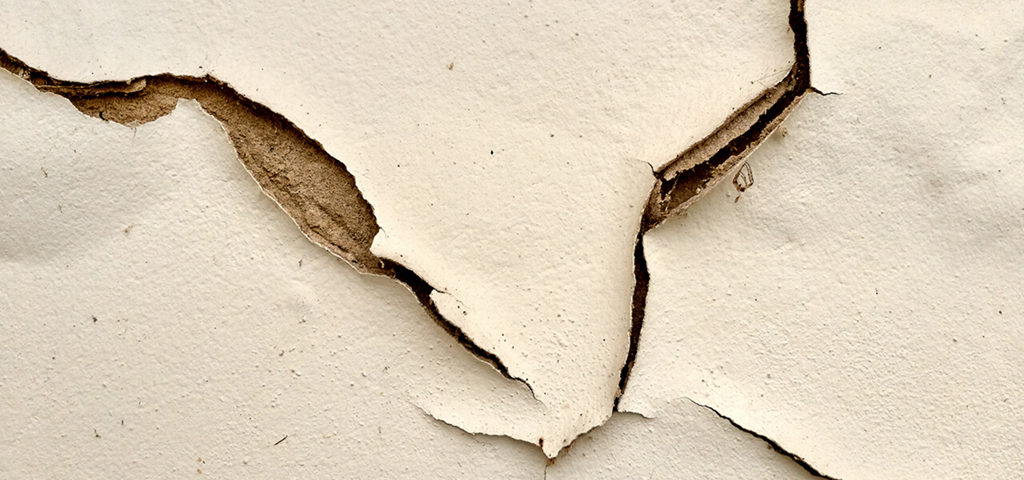
The time factor along with the application of poor-quality paints and coatings are often the cause of peeling walls. But let’s take a better look.
What’s causing the peeling on the walls?
A flake on a wall often indicates that the coating and plaster have lost their adhesion. There can be many reasons behind this and an easy fixing process overall.
In the majority of cases, especially for façades and exterior walls, peeling is the result of inadequate maintenance humidity, especially in rainy and low temperature periods.
Structural settling. The structure may settle over time, causing walls and façades to crack and leading to the lifting of paints and coatings, especially if they are poor-quality or have low elasticity.
Poor preparation of the surface before painting.Either because there was no proper cleaning prior painting or because of application of wrong coating.
Non-porous surface. When the surface has no porosity, the coating cannot have a proper adhesion/ penetration which makes it very easy to lift over time.
Applying paint in high moisture conditions, or not leaving enough drying time between coats, can also be the reason why the paint ends up lifting.
How to repair a peeling wall
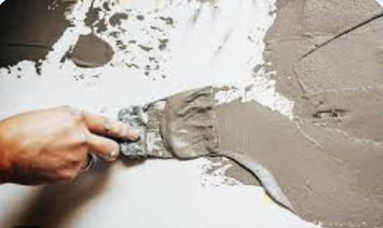
The process of fixing a peeling wall is simple and fast yet very important as it stops the surface from deteriorating further.
- Clean the surface properly. Remove all dents and paint residues with the help of a spatula and then repair the surface with wall filler. Wall putties are effective for smoothing out imperfections and plastering surfaces.
- After applying the filler, sand the surface well and brush it to remove all types of debris and dust. The surface should be completely clean, uniform and ready to apply a new coat.
- Apply a coat of primer to increase the adhesive abilities of the surface and assist the coating to penetrate better without future peeling.
- Last but not least apply the correct top coat.